
10 Famous Yokai and the Stories Behind Them

Japan goes far beyond temples, technology, and cuisine. At the heart of its culture lies a rich world of legends and supernatural beings known as yōkai, mystical creatures that have been part of Japanese folklore for centuries.
Some inspire fear, while others spark curiosity and even affection. Their stories have been passed down through generations and have influenced everything from local traditions to anime, manga, and movies.
Learning about Japan’s best-known yōkai also means gaining a deeper understanding of the values, fears, and beliefs that have shaped Japanese identity.
10 Famous Yokai and Their Stories
Below, discover 10 of the most famous yōkai in Japanese culture and learn more about the stories behind them.
1. Kitsune: The Magical Fox and Its Thousand Faces
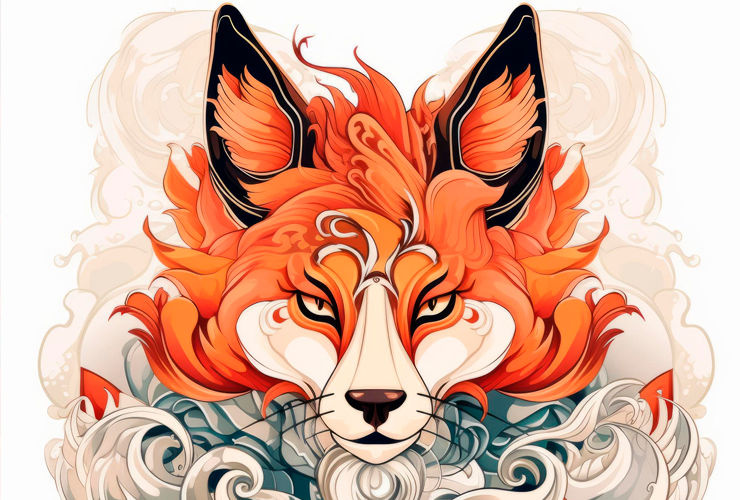
The Kitsune is one of Japan’s best-known yōkai. Associated with the Shinto deity Inari, it can be both a protector and a trickster.
According to legend, Kitsune possess magical powers, including the ability to transform into humans, usually beautiful women.
Some stories tell of Kitsune that help families, while others describe encounters with vengeful foxes.
At temples dedicated to Inari, such as the famous Fushimi Inari-taisha in Kyoto, you will see hundreds of fox statues serving as spiritual guardians.
2. Tengu: Guardians of the Mountains

With humanoid faces, long noses, and wings, Tengu are yōkai associated with mountains and martial arts.
In the past, they were seen as dangerous spirits responsible for deceiving travelers and causing natural disasters.
Over time, however, they came to be regarded as protectors of forests and masters in the training of warriors.
If you visit Mount Takao, near Tokyo, you will see images and shrines dedicated to these legendary creatures.
3. Kappa: The Mischievous River Spirit

The Kappa is one of the most famous and curious yōkai in Japanese folklore. It lives in rivers and lakes and resembles a humanoid turtle, with a water-filled dish on its head that gives it strength.
Known for their tricks and challenges, Kappa appear in stories that teach respect for nature and waterways.
Some can be dangerous, but many myths describe Kappa helping humans in exchange for favors or cucumbers, their favorite food.
4. Yuki-onna: The Snow Woman

Yuki-onna is one of Japan’s most mysterious and poetic yōkai. She appears during snowstorms, dressed in white and with pale, almost translucent skin.
Her stories vary: in some, she is a vengeful spirit who freezes travelers; in others, she is a compassionate figure who spares those who show kindness.
In snowy regions of Japan, such as Nagano and Hokkaido, Yuki-onna is part of the local identity and even inspires winter festivals.
5. Rokurokubi: The Stretching Neck
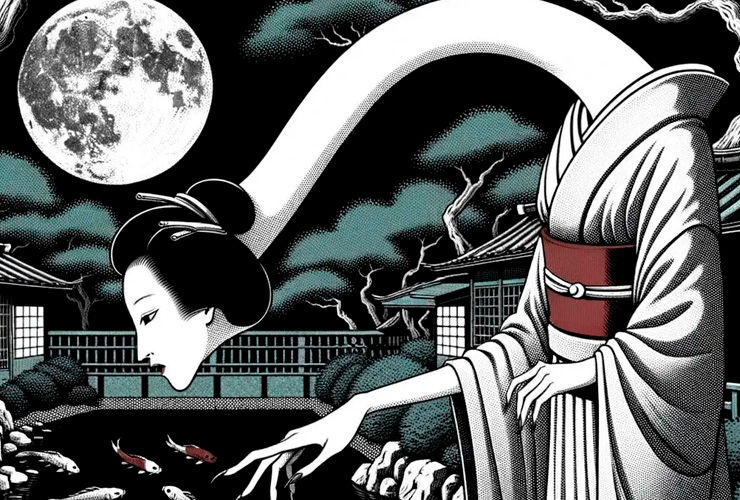
At first glance, Rokurokubi look like ordinary humans. At night, however, their necks stretch to supernatural lengths, allowing them to spy on, frighten, or even attack people.
Some stories portray them as people cursed because of their past actions, while others depict them as playful spirits.
The figure of the Rokurokubi frequently appears in Kabuki theater and traditional illustrations.
6. Tanuki: The Master of Illusions

The Tanuki is a raccoon monk that appears in many Japanese legends and is known for its mischievous and playful personality.
It possesses the power to transform and create illusions, deceiving travelers or business owners.
Unlike many other yōkai, however, the Tanuki is generally regarded as a symbol of good luck and prosperity.
For this reason, Tanuki statues are commonly found in front of restaurants and shops, especially in Kyoto and Nara.
7. Nurarihyon: The Lord of the Yokai

With the appearance of an elderly man with an elongated head, Nurarihyon is considered the “leader of the yōkai.”
He is known for entering people’s homes, sitting down as though he owned the place, and calmly drinking tea.
Although he may seem harmless, he is a symbol of respect among supernatural creatures and appears in many works of pop culture, including manga and anime.
8. Jorōgumo: The Seductive Spider
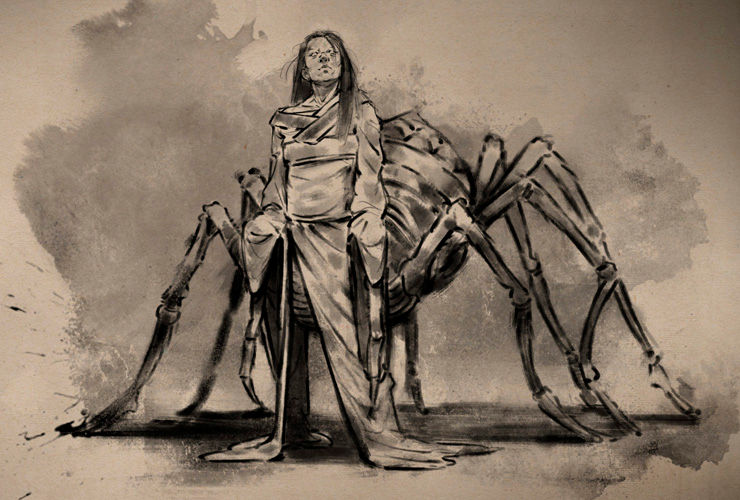
Jorōgumo is a yōkai that takes the form of a seductive woman to lure its victims.
In reality, it is a giant spider that inhabits caves, forests, and waterfalls.
Its stories reinforce the theme of duality between beauty and danger and are common in regions such as Hakone, where legends exist about waterfalls inhabited by Jorōgumo.
9. Gashadokuro: The Giant Skeleton

Gashadokuro is a terrifying yōkai: an enormous skeleton formed from the bones of people who died of starvation or in battle.
According to legend, it wanders at night, making a “gachi gachi” sound as it hunts humans.
With the growth of pop culture, Gashadokuro has come to appear in anime, games, and even traditional tattoos.
10. Noppera-bō: The Faceless Ghost

Noppera-bō is one of the most mysterious yōkai. It appears as an ordinary person, but when you look again… its face has completely disappeared.
Its stories are strongly connected to urban fears and have been told for centuries to frighten nighttime travelers.
Today, Noppera-bō even appears in modern productions, keeping the tradition of oral legends alive.
Experience the Legends Up Close with OsakaDoko
Exploring the world of yōkai goes beyond curiosity: it is a way to discover the soul of Japan, its fears, beliefs, and traditions.
With OsakaDoko, you can visit regions, temples, and museums where these stories originated, enjoying a unique cultural immersion with full support in Portuguese or English.


Comments